
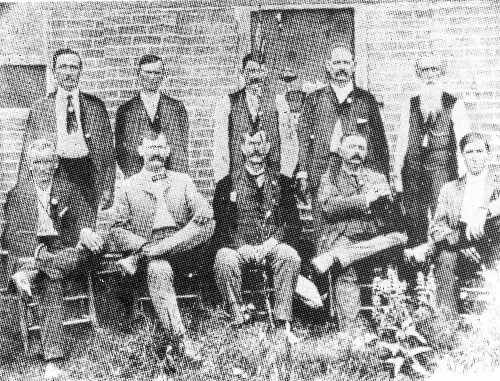
National Farmers Union was founded in 1902 by ten family farmers in Point, Texas, as the Farmers Educational Cooperative Union of America. From its earliest days, NFU championed co-operative rights, fair market access, direct election of senators, and voting rights for women. These efforts contributed to major milestones such as the Federal Farm Loan Act, which established twelve Federal Land Banks.

Throughout its history, NFU has remained committed to improving the economic well-being and quality of life for family farmers, ranchers, and rural communities. Our grassroots members develop policy at the local level, which is then debated and adopted at state and national conventions. These farmer-driven positions guide NFU’s advocacy on issues of profitability, fairness, and competition in agriculture.
NFU’s impact is felt across decades:
1930s–1940s: Established the Farmers Union Central Exchange (later Cenex Harvest States), helped secure permanent school lunch programs, and co-founded CARE to provide postwar relief in Europe.
1960s–1970s: Launched Green Thumb (now Experience Works) to provide employment for older and low-income workers, advanced rural health systems, and joined global hunger efforts.
1980s: Advocated for a capital gains tax on foreign landowners and successfully redirected part of the U.S. military budget to humanitarian food aid using surplus commodities.
1990s–2000s: Secured national organic standards and led a coalition that won mandatory country-of-origin labeling (COOL).
Today, NFU represents family farmers and ranchers across the country. Our enduring strength lies in the grassroots process: individual members propose policies that move through local and state chapters before becoming national priorities.
Guided by this democratic structure, NFU continues to advocate for fair markets, strong communities, and a vibrant future for family agriculture.
